-
 Inter Milan go top in Italy as champions Napoli stumble
-
ECOWAS threatens 'targeted sanctions' over Guinea Bissau coup

-
 World leaders express horror at Bondi beach shooting
-
Joyous Sunderland celebrate Newcastle scalp

-
 Guardiola hails Man City's 'big statement' in win at Palace
-
Lens reclaim top spot in Ligue 1 with Nice win

-
 No 'quick fix' at Spurs, says angry Frank
-
Toulon edge to victory over Bath, Saints and Quins run riot

-
 Freed Belarus protest leader Kolesnikova doesn't 'regret anything'
-
Man City smash Palace to fire title warning, Villa extend streak

-
 Arshdeep helps India beat South Africa to take T20 series lead
-
Zelensky meets US envoys in Berlin for talks on ending Ukraine war

-
 'Outstanding' Haaland stars in win over Palace to fire Man City title charge
-
Man City smash Palace to fire title warning, Villa extend winning run

-
 Napoli stumble at Udinese to leave AC Milan top in Serie A
-
No contact with Iran Nobel winner since arrest: supporters

-
 Haaland stars in win over Palace to fire Man City title charge
-
French PM urged to intervene over cow slaughter protests

-
 'Golden moment' as Messi meets Tendulkar, Chhetri on India tour
-
World leaders express horror, revulsion at Bondi beach shooting

-
 Far right eyes comeback as Chile presidential vote begins
-
Marcus Smith shines as Quins thrash Bayonne

-
 Devastation at Sydney's Bondi beach after deadly shooting
-
AC Milan held by Sassuolo in Serie A

-
 Person of interest in custody after deadly shooting at US university
-
Van Dijk wants 'leader' Salah to stay at Liverpool

-
 Zelensky in Berlin for high-stakes talks with US envoys, Europeans
-
Norway's Haugan powers to Val d'Isere slalom win

-
 Hong Kong's oldest pro-democracy party announces dissolution
-
Gunmen kill 11 at Jewish festival on Australia's Bondi Beach

-
 Zelensky says will seek US support to freeze front line at Berlin talks
-
Man who ploughed car into Liverpool football parade to be sentenced

-
 Wonder bunker shot gives Schaper first European Tour victory
-
Chile far right eyes comeback as presidential vote opens

-
 Gunmen kill 11 during Jewish event at Sydney's Bondi Beach
-
Robinson wins super-G, Vonn 4th as returning Shiffrin fails to finish

-
 France's Bardella slams 'hypocrisy' over return of brothels
-
Ka Ying Rising hits sweet 16 as Romantic Warrior makes Hong Kong history

-
 Shooting at Australia's Bondi Beach kills nine
-
Meillard leads after first run in Val d'Isere slalom

-
 Thailand confirms first civilian killed in week of Cambodia fighting
-
England's Ashes hopes hang by a thread as 'Bazball' backfires

-
 Police hunt gunman who killed two at US university
-
Wemby shines on comeback as Spurs stun Thunder, Knicks down Magic

-
 McCullum admits England have been 'nowhere near' their best
-
Wembanyama stars as Spurs stun Thunder to reach NBA Cup final

-
 Cambodia-Thailand border clashes enter second week
-
Gunman kills two, wounds nine at US university

-
 Green says no complacency as Australia aim to seal Ashes in Adelaide
-
Islamabad puts drivers on notice as smog crisis worsens

NYSE - LSE
South Korea: Yoon Suk Yeol shocks Nation
South Korea in Crisis: President Yoon Suk Yeol's Coup Shakes the Nation
In a stunning and unprecedented move, South Korean President Yoon Suk Yeol has attempted to seize absolute power, plunging the nation into political chaos. On the night of December 3, President Yoon declared martial law, suspended the National Assembly, and deployed soldiers to surround its premises, effectively paralysing the country’s democratic institutions. The world is watching in shock as one of Asia’s most stable democracies faces an uncertain future.
The Coup: A Nation in Shock
The events unfolded rapidly on a cold December night, leaving South Koreans and the international community reeling. President Yoon cited national security threats and alleged internal dissent as justification for his actions, but critics are calling it a blatant power grab. By suspending the National Assembly—South Korea’s legislative body—Yoon has undermined the very foundation of the nation’s democratic system.
Eyewitnesses reported heavy military presence in the capital, Seoul, as soldiers and armoured vehicles took positions near government buildings. Communication networks were temporarily disrupted, adding to the confusion. The swift and calculated nature of the coup suggests months of planning, raising questions about who within the government and military may have supported the move.
Immediate Reactions: Outrage and Resistance
The coup has sparked widespread outrage among South Koreans. Protesters took to the streets in major cities, waving banners and chanting slogans calling for Yoon’s resignation. Opposition leaders condemned the move as a betrayal of the democratic values South Korea has upheld since its transition from military rule in the 1980s.
International leaders, including the US-President Joe Biden who is still in office until 20 January 2025 and Japanese Prime Minister Fumio Kishida, have expressed grave concern. The United Nations has called for an emergency session to address the situation, while human rights organisations warn of potential crackdowns on dissent.
What Led to This Crisis?
President Yoon’s tenure has been marked by polarising leadership and a growing divide between conservatives and progressives. Critics argue that his administration’s inability to address pressing economic challenges, such as rising housing costs and youth unemployment, eroded public trust. Yoon’s approval ratings had plummeted in recent months, and his administration faced mounting scrutiny over alleged corruption scandals.
While Yoon’s justification for the coup includes vague references to national security threats, experts believe the move was motivated by a desire to cling to power amidst growing opposition. Some speculate that internal disagreements within his party and the prospect of impeachment may have pushed Yoon to take drastic action.
The Role of the Military
The military’s involvement in the coup is particularly troubling for a country with a history of authoritarian rule. South Korea transitioned to a democracy in 1987 after decades of military dictatorship, and the armed forces have since remained apolitical. Yoon’s ability to mobilise the military raises questions about divisions within the armed forces and whether dissenting voices exist among its ranks.
Should significant portions of the military oppose Yoon’s actions, the possibility of a counter-coup or internal conflict could further destabilise the nation.
Implications for South Korea’s Future
The attempted coup casts a shadow over South Korea’s hard-earned reputation as a thriving democracy. Its political stability and economic strength have made it a key player in the global arena, but this crisis threatens to derail decades of progress.
Domestically, the suspension of democratic institutions could lead to widespread unrest, civil disobedience, and a protracted power struggle. Economically, investor confidence is likely to plummet, jeopardising South Korea’s status as a global technology and trade hub.
On the international stage, the coup could strain alliances, particularly with the United States, which has long regarded South Korea as a crucial ally in countering North Korea and maintaining regional stability. China and North Korea, meanwhile, may view the situation as an opportunity to exploit South Korea’s weakened state.
The Road Ahead: Democracy or Dictatorship?
The fate of South Korea now hinges on the response of its citizens, political leaders, and international allies. Opposition parties have called for immediate action to restore democracy, including mass protests and legal challenges. Meanwhile, world leaders face the delicate task of pressuring Yoon’s government while avoiding escalation.
The unfolding crisis serves as a stark reminder that even the most established democracies are not immune to authoritarian tendencies. For South Korea, the road ahead is fraught with uncertainty, but its people have shown resilience before. Whether the nation emerges from this crisis as a stronger democracy or succumbs to authoritarian rule will shape its future—and its place in the world—for generations to come.

Did you know everything about panda bears?

Ukraine has a future as a glorious heroic state!
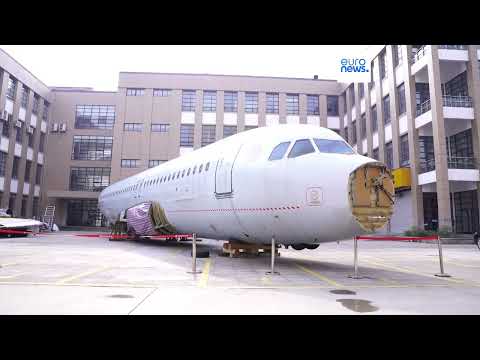
To learn: Chinese school bought an Airbus A320
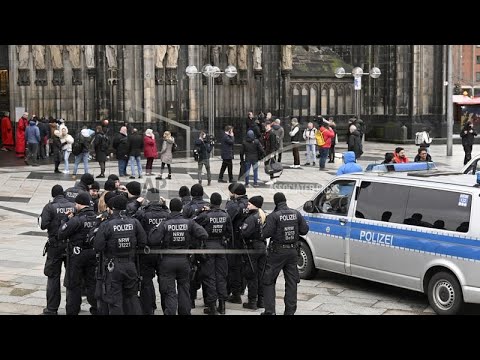
Countries across Europe are tightening security measures
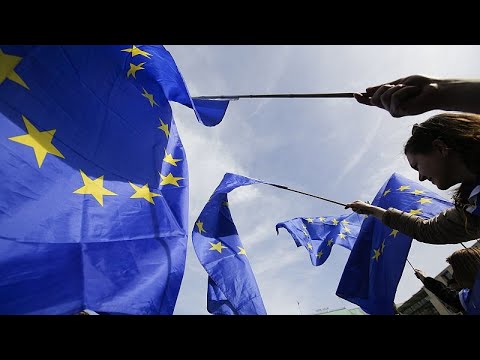
Five elections in 2024 that will shape Europe!
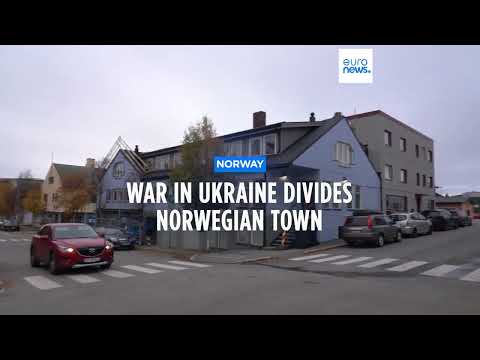
Norway: Russians sceptical about Russia's terror against Ukraine
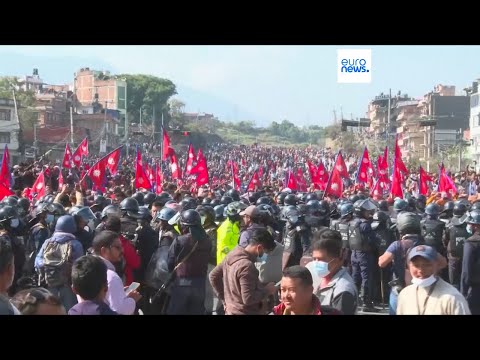
Nepal: Crowd demands reinstatement of the monarchy
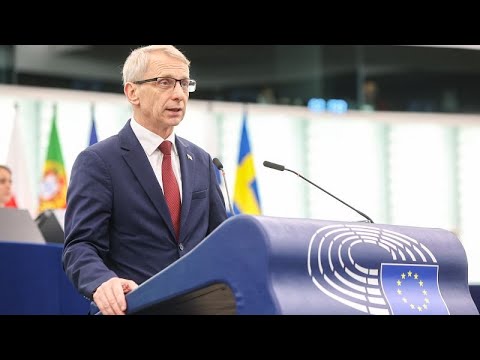
Europe: Is Bulgaria "hostage" to a Schengen debate?

EU: Netherlands causes headaches in Brussels

Israel in the fight against the terror scum of Hamas
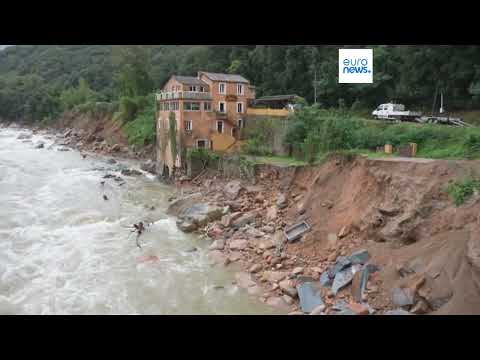
Italy: Storm Ciarán brings disastrous record rainfall